
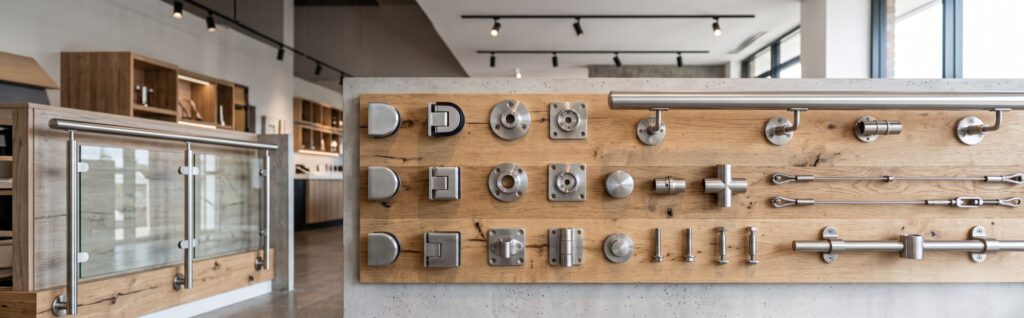
Balustrade fittings are the unsung heroes of modern architectural design. Whether you are installing a sleek glass railing on a high-rise balcony, a classic stainless steel handrail along a commercial staircase, or a minimalist wire rope system around a residential deck, the quality and design of your balustrade fittings determine both the structural integrity and aesthetic appeal of the final build.
In this guide, we break down the primary types of balustrade fittings, key material considerations, and essential factors to keep in mind for your next project.
What Are Balustrade Fittings?
Balustrade fittings comprise all the hardware components used to secure, support, and connect the elements of a balustrade system. This includes posts, glass clamps, spigots, handrail brackets, end caps, tensioners, and base plates. These components transfer load forces—such as human weight, wind pressure, and impact—safely to the main supporting structure.
Primary Types of Balustrade Fittings
Depending on the infill material and architectural style, balustrade fittings fall into several main categories:
1. Glass Balustrade Fittings
Glass balustrades maximize light and views, relying heavily on specialized mounting hardware:
-
Glass Clamps & Clips: Mount glass panels directly to posts or walls, providing strong support while maintaining clean visual lines.
-
Spigots (Mini-Posts): Heavy-duty surface or core-drilled clamps that grip glass panels at the base, creating a seamless, frameless aesthetic.
-
Standoff Pins (Point Fixings): Stainless steel disc fasteners that secure glass directly to the side of a fascia board or wall.
-
U-Channels / Base Shoes: Continuous aluminum or stainless steel channels that hold the bottom edge of heavy laminated or tempered glass panels.
2. Cable & Wire Rope Fittings
Ideal for industrial or modern outdoor decks, cable balustrades rely on high-tension stainless steel components:
-
Tensioners & Turnbuckles: Maintain precise wire tension over long runs to keep the system rigid and code-compliant.
-
Swage Studs & Terminals: Fixed end anchors pressed onto the cable to secure it into post holes.
3. Handrail Fittings & Accessories
Handrails provide crucial support and stability for stairways and walkways:
-
Wall & Post Brackets: Fixed or adjustable brackets that secure handrails to vertical surfaces or posts.
-
Elbows, Tees, & Joiners: Flush fittings used to navigate corners, turns, and level transitions smoothly.
-
End Caps & Base Plates: Protective caps that seal tube ends and sturdy plates for anchor-bolting posts to floors.
Material Selection: Grade 304 vs. Grade 316 Stainless Steel
The choice of material directly impacts maintenance needs and service life. Stainless steel is the industry gold standard, but selecting the right grade is vital:
-
Grade 304 (Indoor / Standard Use): Excellent strength and corrosion resistance for interior residential and light commercial settings away from harsh chemicals or high moisture.
-
Grade 316 (Marine Grade / Outdoor Use): Formulated with added molybdenum, Grade 316 provides superior resistance to chlorides (sea spray, saltwater pools, and de-icing salts). It is essential for coastal installations and outdoor environments.
-
Matte Black & Powder-Coated Finishes: Popular in contemporary design, these finishes apply a protective coating over stainless steel or aluminum, adding extra weather resistance alongside a modern look.
Key Considerations for Installation and Safety
-
Building Code Compliance: Balustrades must meet localized regulations governing handrail height, load resistance (line load and point load), and maximum gap spacing (typically preventing a 4-inch/100mm sphere from passing through).
-
Glass Compatibility: Ensure clamps and spigots match the exact thickness and type (toughened vs. laminated toughened glass) of your panels.
-
Substrate Strength: Fittings are only as reliable as the surface they are anchored to. Ensure concrete, timber, or steel framing is structurally sound before mounting hardware.
Frequently Asked Questions (FAQ)
What is the difference between Grade 304 and Grade 316 balustrade fittings?
Grade 304 is suitable for general indoor applications. Grade 316 contains molybdenum, which grants superior protection against rust and corrosion, making it necessary for outdoor, coastal, or poolside environments.
Are frameless glass balustrades safe?
Yes, when installed using code-compliant toughened or laminated glass along with high-grade balustrade fittings (such as heavy-duty spigots or base channels), frameless glass systems provide exceptional strength and safety.
How do I clean and maintain stainless steel balustrade fittings?
Wipe fittings periodically with warm water, mild soap, and a soft microfiber cloth. For outdoor installations, applying a dedicated stainless steel cleaner or passivation treatment twice a year helps prevent surface tea-staining and oxidation.
Can I install glass balustrade fittings myself?
While basic handrail components or modular fittings can be installed by experienced DIYers, frameless glass systems often require precise engineering, heavy glass handling, and exact torque settings. Professional installation is recommended to guarantee safety and code compliance.
Contact EZRails for more information.
