
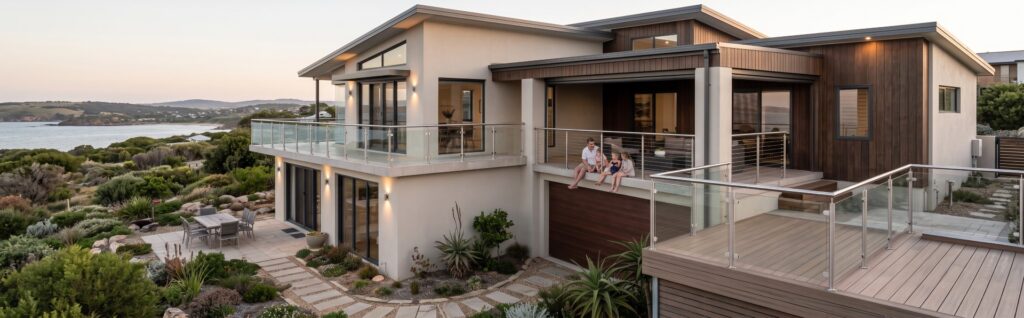
Installing a protective railing around a deck, patio, or staircase used to require specialized trade skills and expensive custom fabrication. Today, DIY balustrade kits have revolutionized home renovations by delivering pre-engineered, modular components directly to your doorstep. Designed for straightforward assembly using standard hand tools, these systems let homeowners achieve a professional, code-compliant finish at a fraction of the cost.
Whether you prefer unobstructed views or an industrial steel look, this guide covers everything you need to know about selecting and installing a do-it-yourself railing kit.
Why Choose DIY Balustrade Kits?
Modular railing kits offer several distinct advantages over traditional custom builds:
-
Cost Savings: Eliminates custom welding and high labor fees by streamlining assembly into manageable steps.
-
Pre-Engineered Compliance: Quality kit systems are engineered to meet standard residential building codes for load capacity and height requirements.
-
Versatility: Pre-drilled posts, adjustable brackets, and modular infills adapt easily to various layouts, including straight runs, corners, and stair flights.
-
All-in-One Packaging: Most kits bundle all core hardware—posts, fasteners, tensioners, and instructions—reducing time spent searching for compatible parts.
Popular Types of DIY Balustrade Kits
Selecting the right system depends on your aesthetic goals, maintenance preferences, and budget:
1. Wire Rope & Cable Kits
Popular for decks and outdoor balconies, wire cable kits use slim stainless steel strands to preserve surrounding views.
-
Best for: Decking, garden terraces, and modern interiors.
-
Key Components: Turnbuckles, pre-swaged wire cables, post eyelets, and handrails.
-
Pros: Minimalist appearance, excellent airflow, and low wind resistance.
2. Glass Panel Kits
For maximum transparency and wind protection, modular glass kits utilize toughened glass panels supported by base channels or spigots.
-
Best for: Pool surrounds, high-rise balconies, and scenic views.
-
Key Components: Surface-mounted spigots, rubber gaskets, top cap rails, and tempered safety glass.
-
Pros: Blocks wind, easy to clean, and provides luxury visual appeal.
3. Tubular & Metal Bar Kits
Constructed from powder-coated aluminum or stainless steel, metal bar kits offer classic vertical or horizontal infills.
-
Best for: Traditional staircases, front porches, and commercial walkways.
-
Key Components: Pre-slotted posts, balusters/spindles, top rails, and floor mounting plates.
-
Pros: Highly durable, low maintenance, and rigid structure.
Essential Tools for DIY Installation
Before starting your project, ensure you have the following basic tools ready:
-
Measuring Tape & Spirit Level: Crucial for setting accurate post spacing and checking vertical alignment.
-
Power Drill & Driver Bits: Necessary for drilling pilot holes and securing anchor bolts into timber or concrete substrates.
-
Cable Crimper / Swaging Tool: Required for wire cable kits that do not use push-fit terminals.
-
Hex Keys & Allen Wrenches: Used for tightening glass clamps, tensioners, and modular post connectors.
-
Safety Gear: Safety glasses, work gloves, and ear protection.
Key Steps to Ensure a Successful Build
-
Measure Twice, Order Once: Accurate measurements are critical. Measure total run lengths and mark post locations before ordering components.
-
Check Substrate Suitability: Ensure your deck framing, concrete slab, or stair stringer is solid and structural. Anchor bolts require solid timber or cured concrete to achieve specified load ratings.
-
Follow Local Building Regulations: Ensure your post height meets local requirements (typically 36 to 42 inches or 1,000mm) and infill gaps remain smaller than 4 inches (100mm).
Frequently Asked Questions (FAQ)
Are DIY balustrade kits difficult to install?
Most modular kits are designed for straightforward installation by anyone with intermediate DIY skills. Systems with pre-drilled posts and push-lock cable fittings require minimal specialized tools.
Do DIY balustrade kits meet building safety codes?
Yes, reputable manufacturers design kits to meet standard residential line-load and height codes. Always verify local regulations and follow the manufacturer’s load guidelines for post spacing and anchoring.
Can I install a cable balustrade kit on stairs?
Yes. Many wire cable and metal bar kits offer adjustable stair posts and swivel fittings designed specifically to match common stair angles.
How far apart should posts be spaced in a DIY kit?
Recommended post spacing typically ranges between 4 feet and 6 feet (1.2m to 1.8m), depending on the infill type and post material. Refer to your kit’s engineering specification to maintain proper structural support.
Contact EZRails for more information.
See also:
Balcony Railing Ideas: Designs to Elevate Outdoor Spaces
Glass Railing for Home: Modern Safety and Style
Modern Staircase Railing: Styles, Materials, and Design Ideas
